
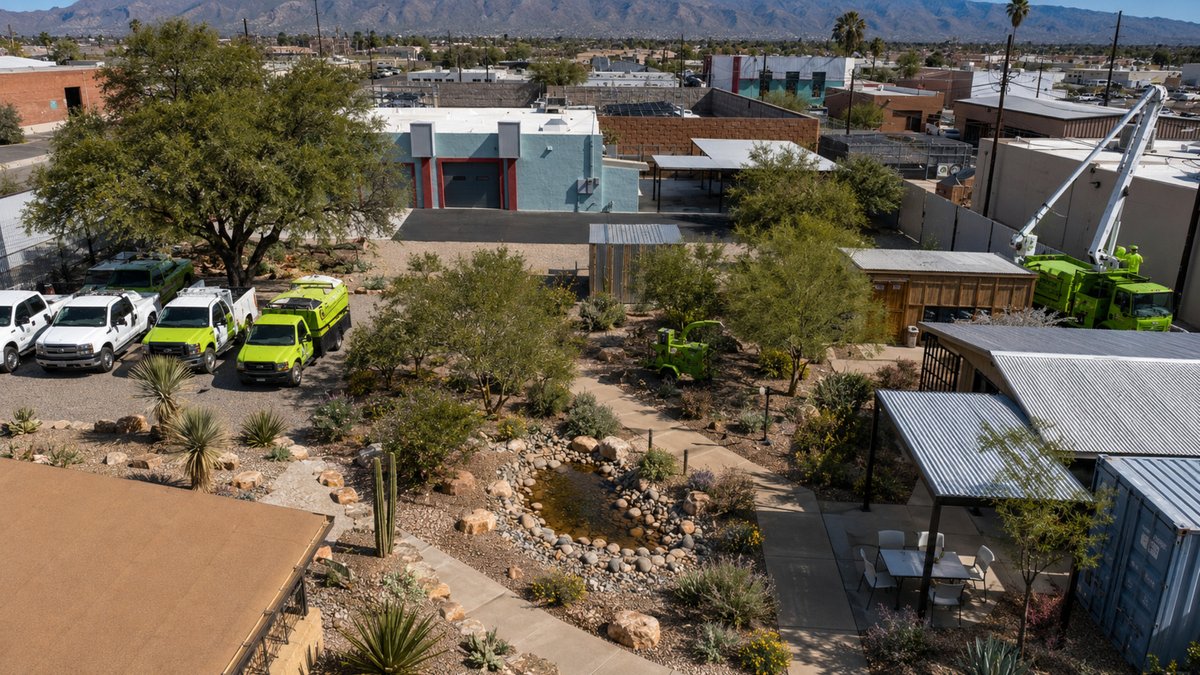
Landscape water conservation is becoming a routine commercial-property responsibility across Arizona rather than a one-time upgrade. Water efficiency is becoming a routine commercial-property responsibility in Arizona rather than a one-time landscape upgrade. Owners and managers are being asked to understand where irrigation water goes, plan improvements, and select landscapes suited to long-term desert conditions.
Requirements and programs vary by location and property type, so this article is a planning overview—not legal advice.
Water management is becoming more measurable
The Arizona Department of Water Resources provides commercial facilities with water-management checklists, audit forms, irrigation inspection resources, and guidance for site-specific conservation planning. This reflects a broader shift from general goals such as “use less water” toward documented baselines, inspections, and prioritized improvements.
Commercial properties can start by separating landscape use from other facility demand where practical, reviewing seasonal patterns, and recording major repairs or planting changes.
Efficient irrigation remains the first operational opportunity
Low-water plants do not save water when lines leak, emitters are missing, pressure is incorrect, or schedules remain unchanged through the year. Zone-by-zone inspections, controller cleanup, flow monitoring, and appropriate scheduling can reveal avoidable use before a major renovation is considered.
Arcadia Landscape provides commercial irrigation services in Tucson, including repairs, upgrades, replacement, and new systems.
Plant palettes are shifting toward regional fit
ADWR maintains low-water-use and drought-tolerant plant lists for Arizona’s Active Management Areas. The practical trend is not simply “use natives everywhere.” It is to select plants suited to each microclimate, group them by water need, allow for mature size, and avoid species that require constant correction.
Regional fit can reduce replacement, pruning, and irrigation pressure while giving commercial properties a recognizable Sonoran Desert character.
Nonfunctional turf is under greater scrutiny
In 2023, Tucson adopted development-code amendments prohibiting ornamental turf in new commercial, industrial, institutional, and residential common-area development. Existing properties and sites outside the city may face different rules, and details can change.
Before removing or adding turf, confirm current requirements and determine whether the area serves a genuine recreational or operational use. Replacement should be designed rather than treated as a simple material swap.
Rainwater is being treated as a site resource
Tucson has long incorporated water harvesting into commercial development standards. Properly designed basins and drainage features can direct runoff toward landscape plants while supporting broader stormwater goals.
These features must coordinate with grading, utilities, structures, and approved plans. Maintenance is essential: blocked inlets, sediment, erosion, and damaged overflow paths can prevent the system from working as intended.
Owners are comparing life-cycle costs
Water-efficient design is increasingly evaluated alongside maintenance labor, replacements, energy, and capital costs. A smart controller may be valuable, but only if the field system works and staff respond to alerts. Removing turf may reduce irrigation demand, but the replacement still needs weed control, cleanup, and periodic renewal.
The better question is not “Which product saves the most?” It is “Which combination of design, equipment, maintenance, and monitoring performs best on this property?”
Incentives require current verification
Tucson Water offers commercial and multifamily conservation resources, rebates, incentives, and services. Program availability, eligible equipment, funding, and preapproval requirements can change. Verify current terms directly before budgeting around an incentive.
Build a practical water plan
Start with an irrigation inspection, identify recurring failures, map plant water needs, and rank projects by impact. Arcadia Landscape can coordinate commercial irrigation, xeriscaping, construction, and maintenance.
What landscape water conservation now requires
Practical landscape water conservation combines measurement, efficient irrigation, and appropriate plant selection instead of relying on any single change.
Request a commercial water-management landscape assessment for your Tucson property.