
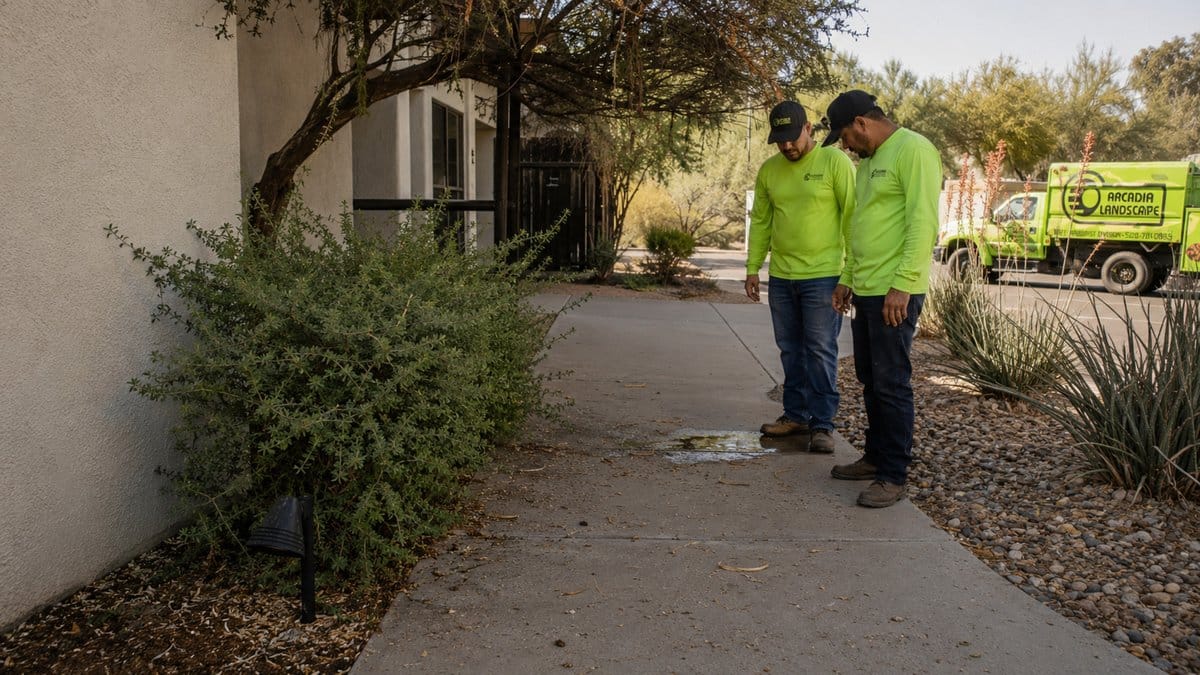
Most landscape tenant complaints on commercial properties come from a short list of visible, preventable problems. Tenants may not know the details of a landscape maintenance contract, but they notice when the outdoor environment interferes with daily use of the property. A wet sidewalk, blocked sign, fallen branch, or neglected entry can quickly become a complaint for the property-management team.
The most effective response is not to chase isolated symptoms. It is to identify recurring landscape conditions and build them into routine inspections.
1. Irrigation water on pedestrian and parking surfaces
Overspray and runoff create an immediate inconvenience. Tenants do not want to walk through water on the way to an office, find vehicles repeatedly sprayed, or encounter slick surfaces near an entrance.
Common causes include tilted heads, damaged nozzles, broken lines, poor scheduling, plant growth blocking spray, and runoff from compacted or sloped areas. The solution begins with observing the zone while it operates—not just reviewing the controller.
If the problem is recurring, a commercial irrigation inspection can identify whether repair, scheduling, or system design is responsible.
2. Branches and plants blocking movement or visibility
Vegetation that extends into a walkway, parking space, doorway, or accessible route can interfere with how the property functions. Overgrowth can also conceal directional signs, business names, security cameras, lighting, and approaching vehicles.
Pruning should address the specific clearance or visibility concern while respecting plant health and natural form. Repeatedly forcing a plant into a space that is too small may indicate a design problem rather than a maintenance problem.
3. Debris that lingers in customer-facing areas
Wind, seasonal leaf drop, flower litter, storm debris, and trash can collect quickly against curbs, walls, shrubs, and drains. Even when the plant material is healthy, accumulated debris makes a property feel unmanaged.
High-visibility locations often need a different service rhythm from back-of-house areas. Entrances, patios, leasing offices, pickup zones, and main walkways should have defined appearance standards and a clear process for reporting problems between scheduled visits.
4. Inconsistent appearance across the property
Tenants notice contrast. One entry may be polished while another has failed plants, thin rock coverage, weeds, or mismatched pruning. Inconsistent care can create the impression that certain buildings or areas receive less attention.
A property-wide inspection should compare similar areas against the same standard. Photo documentation is useful for multi-building properties because it makes recurring deficiencies and completed corrections easier to track.
5. Landscape conditions that feel unsafe
Dead limbs, unstable trees, hidden lighting, thorny plants near paths, exposed irrigation components, eroded soil, and displaced materials may generate concern even before an incident occurs. Property managers should have a fast escalation process for landscape conditions that may affect people, vehicles, or buildings.
Tree concerns deserve particular attention before Tucson’s monsoon season. A qualified assessment can determine whether pruning, monitoring, or removal should be considered. See Arcadia Landscape’s tree-care services for residential and commercial properties.
Turn complaints into an inspection system
Complaint logs can reveal more than individual service issues. Group reports by location, time, and type. If the same walkway receives irrigation complaints every week, or the same entrance repeatedly accumulates debris, the underlying condition needs a permanent response.
A practical landscape communication process should include:
- One point of contact for routine concerns
- A separate path for urgent leaks or hazards
- Photos and exact locations
- Target response times
- Confirmation when work is complete
- A recurring review of repeat complaints
Protect the tenant experience outdoors
Commercial landscaping is part of how tenants, customers, and visitors experience a property. Arcadia Landscape provides commercial landscaping in Tucson, from construction and irrigation to maintenance, tree care, and enhancements.
Reducing landscape tenant complaints before they start
Tracking landscape tenant complaints and addressing their root causes protects occupancy and keeps a property looking managed. Municipal standards from the City of Tucson can inform right-of-way and safety expectations.
Request a property landscape walkthrough to identify recurring concerns before they become recurring complaints.