
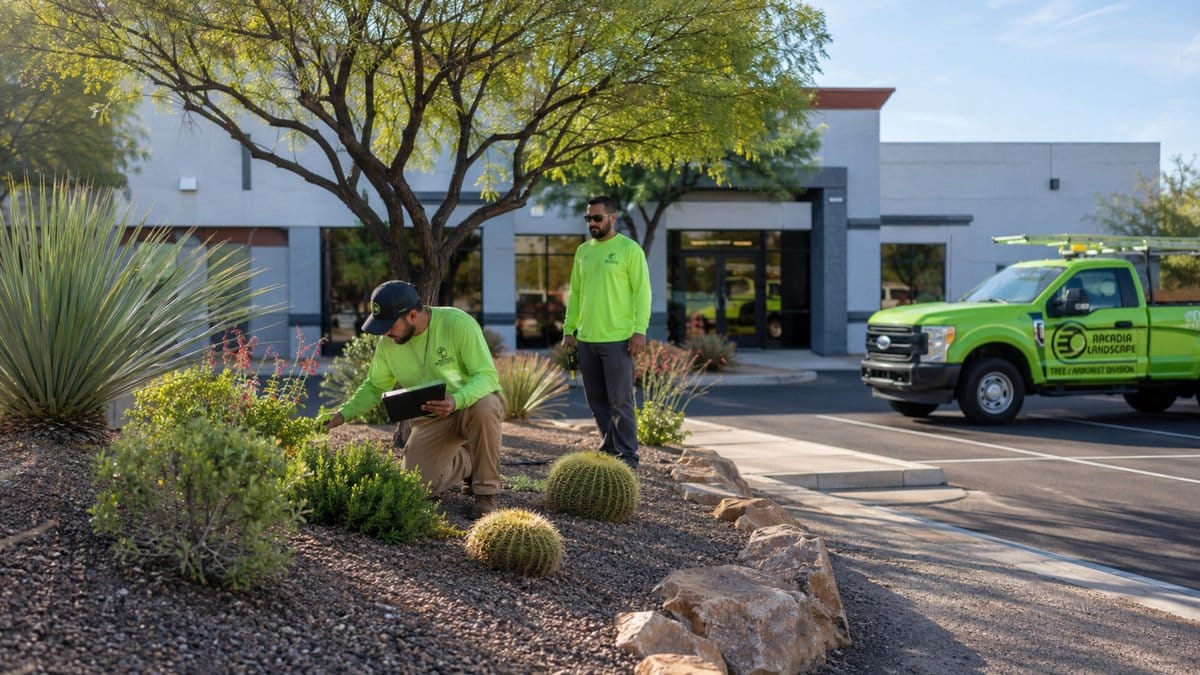
A focused spring landscape maintenance routine is the most cost-effective work a Tucson commercial property can schedule before summer arrives. Spring in Tucson is the short planning window between winter recovery and the intense demands of summer. For a commercial property, the work completed now can influence plant health, water use, curb appeal, and storm readiness for months.
This checklist helps property managers and facility teams identify priorities before higher temperatures and monsoon weather expose small problems.
1. Walk the entire property
Begin with a documented site walk. Review entrances, parking-lot islands, pedestrian routes, gathering areas, utility zones, and property edges. Look for:
- Dead, declining, or damaged plants
- Bare or thin areas that disrupt the design
- Broken edging or displaced decorative rock
- Branches obstructing signs, lights, windows, sidewalks, or vehicle sightlines
- Trip hazards created by roots, erosion, or shifted materials
- Litter and debris collecting behind shrubs or in drainage areas
Take photos from the same locations each season. A repeatable record makes it easier to identify gradual decline and explain budget priorities.
2. Inspect irrigation before demand peaks
Run each irrigation zone and observe it in operation. A controller may appear normal while a cracked line, clogged emitter, damaged head, or incorrect schedule wastes water elsewhere on the property.
Confirm that water reaches the intended root zones without spraying pavement, pooling near foundations, or running into the street. Check valves, filters, emitters, spray heads, and exposed tubing. Then adjust schedules for current conditions rather than immediately using a midsummer setting.
For a deeper system review, see Arcadia Landscape’s commercial irrigation services.
3. Prepare plants for hotter weather
Remove dead material and evaluate whether pruning is needed for health, clearance, or safety. Avoid treating every plant as if it needs to be shaped the same way. Proper pruning should respect the species’ natural form and the reason the plant was placed there.
Also inspect the root zones of trees and shrubs. Decorative rock, soil, or mulch should not be piled against trunks. Young or recently installed plants may need closer monitoring as temperatures rise.
4. Address weeds before they dominate the site
Small weed populations are easier to manage than mature weeds that have produced seed. Identify where weeds repeatedly emerge—often near irrigation, disturbed soil, curbs, and drainage paths—and build those areas into the maintenance plan.
Pre-emergent and post-emergent treatments serve different purposes. The correct approach depends on whether the target weeds are still seeds or are already growing. Learn more about commercial and residential weed control.
5. Check drainage and monsoon pathways
Spring is the time to clear debris from swales, curb openings, basins, and drainage routes. Do not wait for the first major storm to discover that runoff cannot move through the property as intended.
Look for erosion, sediment buildup, damaged basin edges, and low areas that hold water against buildings or pedestrian surfaces. Any grading or drainage change should be evaluated in the context of the overall site plan.
6. Refresh high-visibility areas selectively
Not every part of a property needs the same level of investment. Prioritize entries, monument signs, leasing offices, customer-facing walkways, and outdoor amenity spaces. Replacing a few failed plants, correcting rock coverage, and improving definition around key focal points can have more impact than making scattered changes across the entire site.
7. Set a summer inspection rhythm
A spring cleanup is not a substitute for ongoing observation. Establish who will report leaks, fallen limbs, blocked paths, weeds, or heat-stressed plants. Include a clear response process so urgent items do not wait for the next routine visit.
Make spring maintenance work harder
The best spring plan connects appearance, plant health, irrigation performance, safety, and budget. Arcadia Landscape provides commercial landscape maintenance in Tucson for office properties, apartments, municipal sites, multi-family communities, and other commercial landscapes.
Building a repeatable spring landscape maintenance plan
Treating spring landscape maintenance as a documented, repeatable process keeps a property presentable and reduces emergencies once heat and monsoon season begin. Regional guidance from the University of Arizona Cooperative Extension can help set expectations for desert-adapted plants.
Request a commercial landscape estimate to build a maintenance plan around your property’s priorities.